Currently in first year studying art & design at Limerick School of Art & Design (LSAD).
This is a blog documenting my research and development of our first year brief "To Sense My Space".
Lorraine gave us our new class brief today. We will be introduced to using the darkroom and we will be learning all the new techniques.We will be spending the next two weeks in the darkroom and on location taking our pictures. The brief is "Urban Space".
Today along with the animation & vis com class we went to a talk given by Conor Horgan in the LIT building.
Conor Horgan is an Irish film director and photographer. He has directed eight films including shorts, arts documentaries and the multi-award winning feature One Hundred Mornings. His photography has been commissioned by Harpers & Queen, GQ, British Vogue and Condé Nast Traveller among many others.
He showed us some of his work and discussed the inspiration behind them. He spoke of his move to London where he purchased his first camera and getting his big break for the Irish Times, when his photo was featured on the cover of the Newspaper in the 80's.
According to Conor photography has a lot to do with recognising when you are in the right time and place and taking advantage of that opportunity. He spoke of how much coverage and publicity that photo brought him and how it led to a windfall in job opportunities at the time.
He spoke of the time he spent working in the advertisement industry and how for him it was soul crushing. His synopsis was that he was basically "creating suffering" as his understanding of advertising is that it's soul purpose is to convince people they need something and their lives are unfulfilled without such a product.
I found the talk really beneficial. He was very interesting to listen to and you were aware of the years of the experience he had form the way he spoke so honestly about his profession.
The Last Time
We watched his first short film "The Last Time" starring Linda Bassett (“East is East”). It received a nation-wide cinema release in Ireland and has been screened at many international festivals including Cannes, Clermont-Ferrand, and Tampere. “The Last Time” was the recipient of seven awards, including the UIP Director Award and Best Irish Short at The Cork Film Festival.
One Hundred Mornings
We also were shown clips from Conor's first feature film, "One Hundred Mornings", which was released in 2011. It met with widespread critical acclaim, being named "one of the very best Irish films of the last decade” by The Irish Times and described as an "intelligent, delicate debut" by the New York Times."One Hundred Days". He spoke of the experience on set filming the project and spoke of spending months locating an ideal succluded house for filming.
Deep End Dance
We finished by viewing "Deep End Dance". It was a beautiful piece of work capturing the relationship between a mother and son, dancing underwater.
The Last Time | Directed by Conor Horgan
On hearing she may not have long to live, a woman in her fifties goes looking for love in all the wrong places.
A short film written and directed by Conor Horgan. Featuring Linda Bassett, Garrett Keogh and Brian Munn.
Some stills from "One Hundred Mornings".
Deep End Dance
Mother and son, above and below the surface.
A short dance film, written and performed by David Bolger (choreographer and artistic director of CoisCéim Dance Theatre, Dublin) along with his 76-year-old mother, Madge Bolger. The film was shot in the Marian College swimming pool, where Madge worked as a swimming instructor for many years and where she taught David to swim.
We had our CCS tutorial with Fiona Woods today and she gave us an assignment to find a magazine cover where the image had been photoshopped and create a second image that challenges the first image. I chose to use a cover from Italian Vogue. The model Fei Sun is flawless, her complection is porcelain. This surreal image brought to mind images of delicate eggshells or porcelain dolls. Since I didn't have a porcelain doll at my disposal I used an eggshell and painted a doll-like face onto it. I wanted to challenge the idea that perfection is as obvious as what is portrayed on the surface - outer beauty.
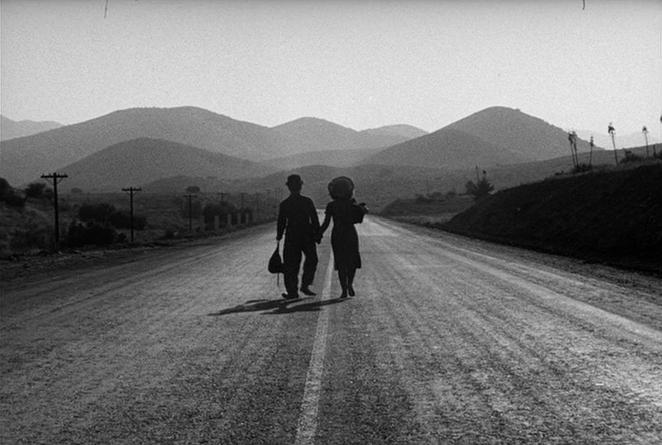
We went to the Limerick City Gallery for a screening of Charlie Chaplin: Modern Times
Modern Times was announced by Chaplin as "a satire on certain phases of our industrial life." Featuring the Tramp and Goddard as endurers of the Great Depression, it took ten and a half months to film. Chaplin prepared to use spoken dialogue, but upon rehearsal changed his mind. Like its predecessor, Modern Times employed sound effects but almost no speaking.Chaplin's performance of a gibberish song did, however, give the Tramp a voice for the only time on film.After recording the music, Chaplin released Modern Times in February 1936.[Charles J. Maland notes that it was his first feature in 15 years to adopt political references and social realism.[The film received considerable press coverage for this reason, although Chaplin tried to downplay the issue.It earned less at the box office than his previous features and received mixed reviews; some viewers were displeased with Chaplin's politicising.Today, the film is seen by the British Film Institute as one of Chaplin's "great features,"while David Robinson says it shows the star at "his unrivalled peak as a creator of visual comedy."
Sir Charles Spencer "Charlie" Chaplin, KBE (16 April 1889 – 25 December 1977) was a British comic actor and filmmaker who rose to fame in the silent era. Chaplin became a worldwide icon through his screen persona "the Tramp" and is considered one of the most important figures of the film industry. His career spanned more than 75 years, from a child in the Victorian era to close to his death at the age of 88, and encompassed both adulation and controversy.
I found this short film on youtube. It has won several awards. I love it.
MEMORIES - Award winning short student film
Written, Directed and Edited by Radoslaw Sienski
- Winner of Best Fiction Award at The Altered Images Student Post Production Festival in London 2010
- Winner of the Yobi.tv Film Making contest 2010
- Winner of the Best Young Filmmaker Award at Fastnet Short Film Festival 2010
- Shortlisted for the Best Film Award at No Limits Film Festival 2010
- Shortlisted at 5th annual international LUMS film festival - FiLUMS 2011
- Shortlisted at AWAKEN! International Spiritual Film Festival 2011
- Soul 4 Reel Film Festival - Official Selection 2011
- Shortlisted at The National Student Film Festival, London 2011
- Nomination - Campus MovieFest 365, London 2011
A2 Media music video focusing on the evolution of music videos and their blend with film. For this unit I was investigating how music videos were subverting their stereotype, which I reflected by not including any aspects of performance. I did however include some key conventions (especially in the editing).
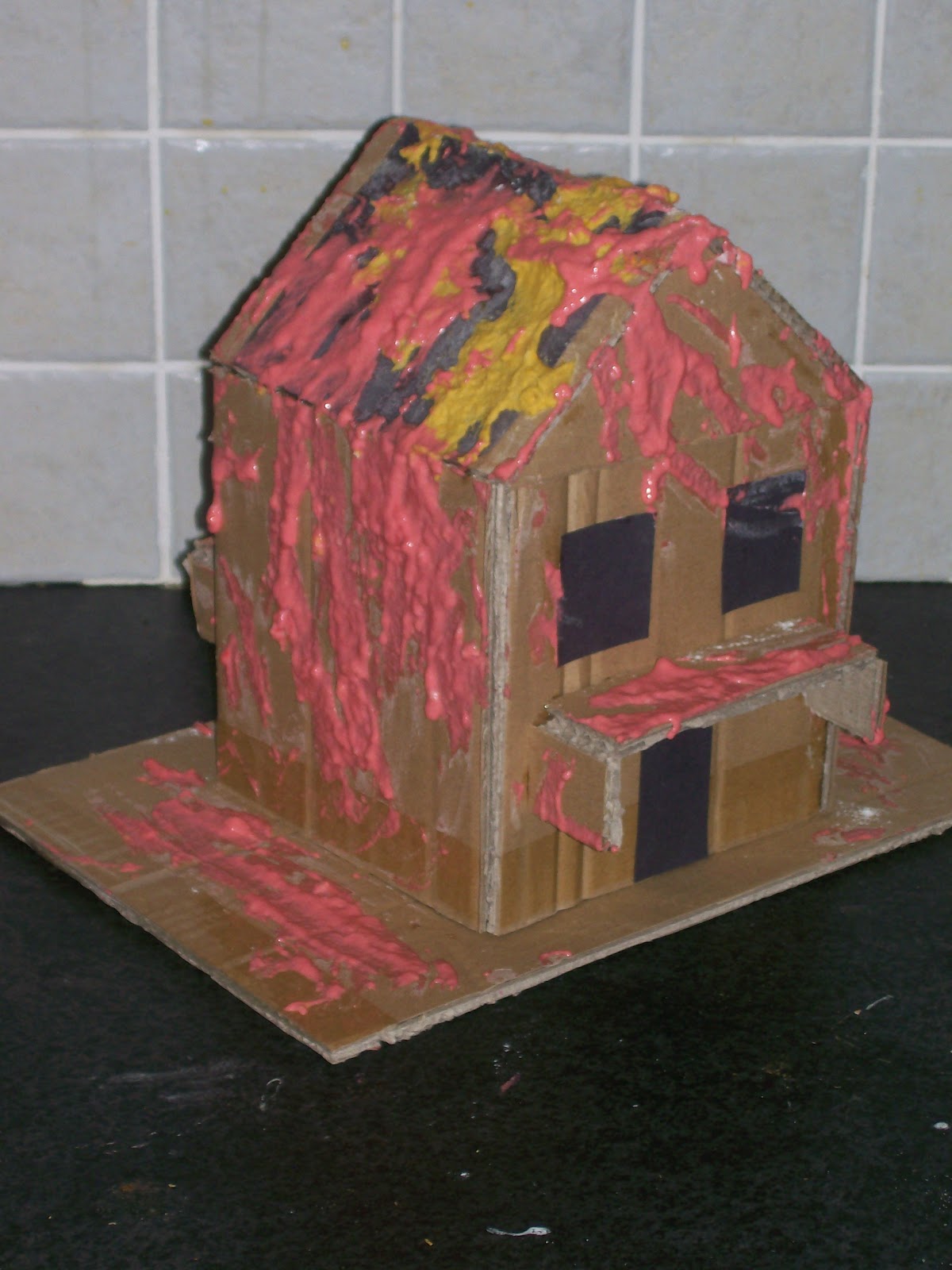
Investigating the combination of nature and urban environment. I build this 3D house as a representation of urban decay. The growth of mould on the house is symbolic of natures power over the urban landscape. Inspired by the work of artist Daniele Del Nero.
The above structure was made using corrugated cardboard and a lot of Uhu glue.
All you need is a bit of Uhu :)
The making of the mould was lots of fun. Taking flour, water, salt & food colouring. I mixed some greens, yellows and pinks to create a mould looking goo which I then applied to the exterior of the house. I shook dry flour over it when I had applied all layers to create a aged, mouldy look of decay.